Showing posts with label Tech news. Show all posts

Wednesday, April 6, 2016

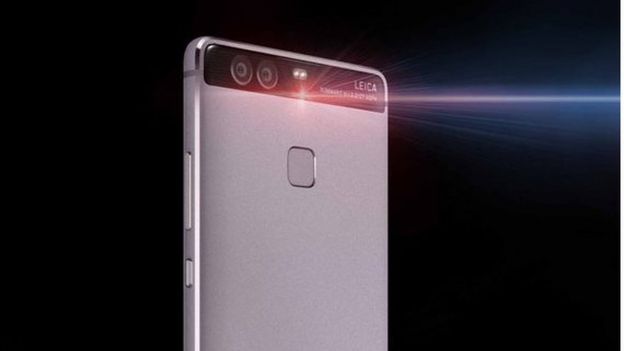
Huawei P9 uses Leica dual-lens camera tech to refocus

Huawei has unveiled an Android smartphone that uses dual-camera technology to let owners refocus photos after they have been taken.

The feature is the result of a collaboration between the Chinese tech firm and German camera-maker Leica.

It means the P9 can create shallow depth-of-field shots more commonly associated with larger lenses.
Analysts say the innovation could help Huawei promote itself as a premium brand and expand its market share.
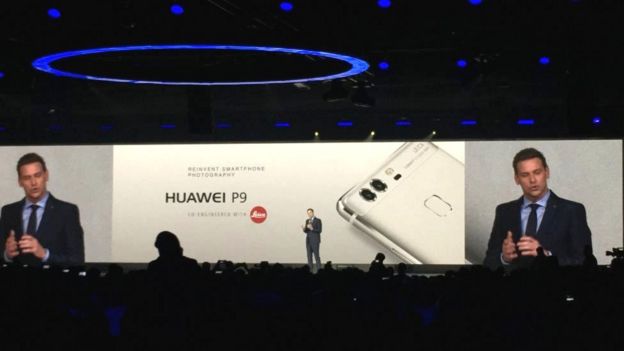
Huawei P9 launch

The Shenzhen-based company shipped more than 106 million handsets in 2015, representing 44.3% growth on the previous year, according to the research firm IDC.


That was the fastest rise in sales of any of the major brands and put Huawei in third place in terms of market share.

However, Apple still sold more than double the number of phones and Samsung more than three times the figure.

"The camera is one of the things that defines a premium smartphone, and there's still plenty of room to improve the quality of the photography," commented Ian Fogg from the IHS Technology consultancy.

"And there are things you can do when you put two camera sensors on the back that you can't do with a single sensor."
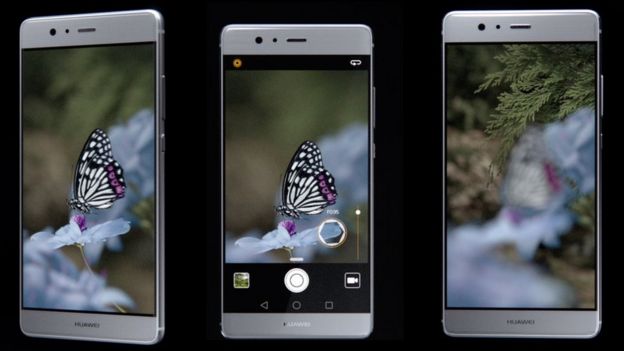
Huawei P9

Shallow focus effect

Rather than offering users the ability to take two different types of photos- as is the case with LG's dual-camera G5 handset - the P9 combines the data from both its rear sensors to create its 12 megapixel shots.

One captures red, green and blue (RGB) information about the view, while the other is limited to collecting monochrome image data.

By making use of both types, the firm says, the phone can deliver better contrast and offer superior performance in low-light conditions.

But the standout feature is the ability to simulate wide-aperture photography - the effect of allowing more light into a lens in order to create a shallow depth-of-field.

A shallow depth-of-field can create striking photographs of a subject with a blurry background.
Photography enthusiasts often spend considerable sums on digital single-lens reflex cameras (DSLRs) and large lenses to create the look.

Unlike these larger cameras, the P9 also allows users to alter the part of the image they want to be in sharp focus after they have pressed the shutter button.

This is made possible by the fact that the phone's two lenses capture slightly different views, and built-in software can analyse the differences to deduce depth information. Alternatively, the files can be exported in the RAW file format for editing on a PC.
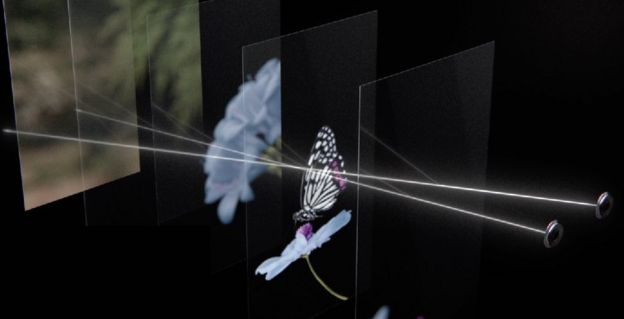
Huawei cameras

The facility is only available in stills mode, however, and cannot be used to refocus captured videos.
Lytro previously tried to sell specialist cameras that offered a similar refocusing ability, however it recently gave up on the consumer market after acknowledging that the rise of smartphone photography had restricted its appeal.

Nokia and HTC have also offered refocusing functions on some of their handsets, although they achieved the effect in a different manner.

Strong brand

One industry-watcher said that the tie-up with Leica should encourage potential buyers not to dismiss Huawei's dual-camera facility as being a gimmick.

"Leica is one of the strongest brands in photography, so having an association with them should make users believe that the quality of the pictures should be good," said Francisco Jeronimo, research director for European mobile devices at IDC.

"Of course, the quality of the image won't be the same as is possible from one of Leica's own cameras, but it does tell people that a company that really understands photography has been involved in engineering the device."

However, Mr Fogg added that Huawei would need to get its marketing right to make the most of the partnership.

"Leica isn't massively well known outside of serious camera enthusiasts," he explained.
"So, Huawei's challenge is how to communicate the benefit of the Leica brand to the general public as it is pushing the P9 as a mass-market flagship and not a niche device aimed at just the camera-centric few."
P9 laser focus

Higher prices

Other features of the P9 include:


◾A 5.2in (13.2cm) display that provides 1080p high definition resolution, which is less than some rivals including Samsung's Galaxy S7 phones

◾A microSD slot to provide extra storage, which may be useful as the dual-camera photos take up more space

◾A fingerprint sensor on the rear of the device

◾Huawei's new ARM-based Kirin 955 computer processor
It will cost between 599 euros ($682; £485) and 649 euros when it goes on sale on 16 April, depending on how much RAM and built-in storage is desired.

The firm is also offering a larger P9 Plus model, which has a 5.5in screen and a bigger battery. It will cost 749 euros.

These mark a jump in cost over last year's P8 family, which ranged from 499 to 649 euros.

Source By: BBC
Tuesday, April 5, 2016

Tesla blames

Tesla blames 'hubris' for Model X part delays

Tesla blames, Tesla, tesla model s for sale, tesla model s price, tesla s, tesla price, tesla car price, tesla car, tesla s price, used tesla model s, model s, used tesla, tesla cost, tesla model x price, Tech news, tesla model s cost, tesla cars, tesla prices,

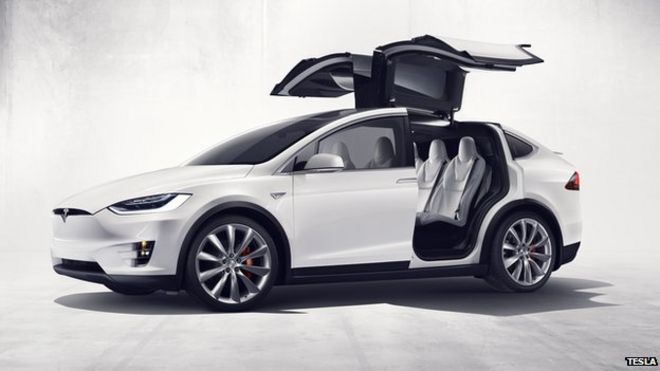
Tesla Motors has revealed that supplies of its Model X electric car have been impacted by a shortage of parts meaning delays for some who have ordered them.

It blamed its own "hubris" for overloading the Model X with technology.
It revealed that it delivered 14,820 cars in the first quarter, falling short of the expected 16,000.
It comes after the firm revealed that its new Model 3 car already has 276,000 pre-orders.
The carmaker said that it had delivered 12,420 Model S sedans and 2,400 Model X SUVs in the first quarter of 2016.


In a statement, Tesla added that its Q1 delivery count was "impacted by severe Model X supplier parts shortages in January and February that lasted much longer than initially expected".
It said that once "issues were resolved", production and delivery rates "improved dramatically".
"By the last full week of March, the build rate rose to 750 Model X vehicles per week, however many of these vehicles were built too late to be delivered to their owners before end of the quarter."
It was frank about the reasons for the delay: "The root causes of the parts shortages were: Tesla's hubris in adding far too much technology to the Model X in version one, insufficient supplier capability validation and Tesla not having broad enough capability to manufacture the parts in-house."

Back in February, Elon Musk admitted that the car had been "over-engineered".
The shortage involved about six out of the 8,000 parts that go into the Model X but Tesla did not specify which ones.
Tesla blames, Tesla, tesla model s for sale, tesla model s price, tesla s, tesla price, tesla car price, tesla car, tesla s price, used tesla model s, model s, used tesla, tesla cost, tesla model x price, Tech news, tesla model s cost, tesla cars, tesla prices,

It has raised doubts about how prepared Tesla will be to deliver its new Model 3 car which was announced to much fanfare last week.

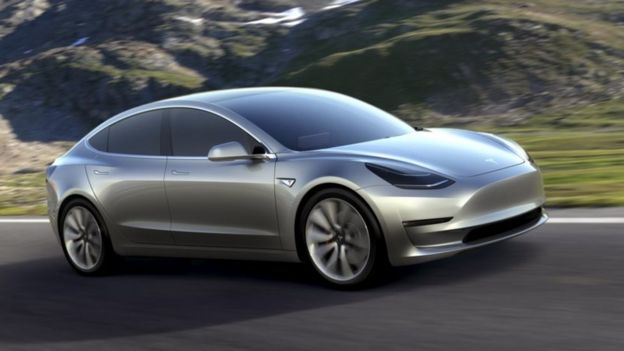
The basic model will sell for $35,000 (£24,423) - less than half the cost of Tesla's previous models - and has a range of at least 215 miles per charge.
The car is due to go on sale in late 2017 and customers must put down a $1,000 (£704) deposit. It can be ordered in advance to dozens of countries, including the UK, Brazil, India, China and New Zealand.

Mr Musk has revealed that the company is focusing on ramping up productions and will eventually need to build a factory in Europe to satisfy demand.
Stephanie Brinley, a senior analyst with research firm IHS, said that it was crucial that it gets production of the new vehicle right.

"Given its history of missed deadlines, this one needs to be met, to earn the faith of consumers and investors alike," she said.
Last year Tesla posted a net loss of $889m (£620m) for 2015, partly because of the large sum it spent on research and development.


Source By: BBC
Tuesday, March 29, 2016

Cracked iPhone

Cracked iPhone

Should you be worried?

Cracked iPhone, iphone screen fix, screen repair, iphone repair, iphone screen repair near me, phone screen repair, cell phone screen repair, iphone screen, apple screen repair, broken screen, cracked screen,

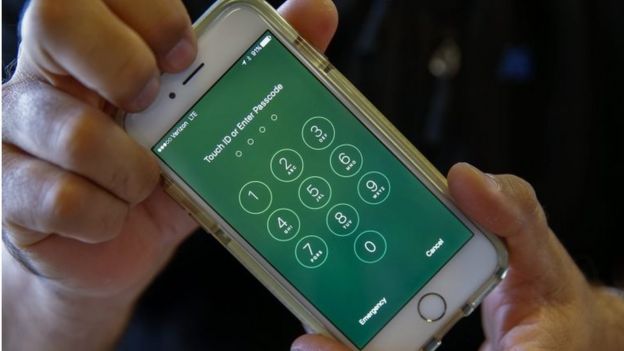
The US government's declaration that it has "successfully accessed the data stored on [San Bernardino gunman] Farook's iPhone and therefore no longer requires" assistance from Apple, ends a six week-long legal clash between the tech firm and the FBI.
But it leaves the issue at the heart of the dispute unresolved: could the FBI have forced Apple to help it unlock the device?
It is unlikely that this will be the last time a law enforcement agency tries to compel a tech company to help bypass security measures.

What are the implications for other cases?

Cracked iPhone, iphone screen fix, screen repair, iphone repair, iphone screen repair near me, phone screen repair, cell phone screen repair, iphone screen, apple screen repair, broken screen, cracked screen,

It had been reported that there were about a dozen other cases in which the US Justice Department was pursuing court orders to force Apple to help its investigators.
The highest profile of these was in Brooklyn, New York, where the FBI wanted access to an iPhone belonging to a defendant who had already pleaded guilty to drug dealing.


In that case, a federal judge had rejected the DoJ's effort to invoke the All Writs Act - a three-centuries-old statute that allows court orders to be issued in circumstances where other laws don't apply.
The DoJ had launched an appeal, but it is not yet clear if it will continue or drop it. Its decision may be based on whether the technique used to extract data from Farook's handset can be used in other cases.
The New York case involved an iPhone 5S running the iOS 7 operating system, while the San Bernardino, California case was about an iPhone 5C running the more modern iOS 9. What works against one device might not work against the other.
But assuming the US government will at some point try again to use the All Writs Act to force Apple or some other tech company to circumvent its data protection measures, it may take a Supreme Court ruling to determine whether this is truly within the authorities' power.

Is there any way to find out how Farook's iPhone was cracked?


Cracked iPhone, iphone screen fix, screen repair, iphone repair, iphone screen repair near me, phone screen repair, cell phone screen repair, iphone screen, apple screen repair, broken screen, cracked screen,
 At this point, there is nothing to compel the FBI to reveal how it was done, although Apple is likely to be pressing hard to find out.
The tech firm's lawyers have already said they would want details of the technique to be made public if evidence from the cracked iPhone is later used at trial.
But it could remain secret. There is scope within US law for the authorities to withhold the source of information if it was supplied to them on a confidential basis, and to protect sensitive intelligence-gathering methodologies.

Should I assume the US authorities can now easily work out any iPhone's passcode?

Cracked iPhone, iphone screen fix, screen repair, iphone repair, iphone screen repair near me, phone screen repair, cell phone screen repair, iphone screen, apple screen repair, broken screen, cracked screen,
Not necessarily.
The court order originally obtained by the FBI had instructed Apple to come up with a special version of its operating system that would have prevented Farook's iPhone from deleting its data or imposing long lockout periods if too many incorrect passcode guesses were made.
However, the latest court filings do not say that someone else has now done this, but merely that some data stored on the device has been obtained.
Researchers at the cybersecurity firm IOActive had proposed that one way of getting data off an iPhone would be to "de-cap" its memory chips.
The process they described involved using acid and lasers to expose and copy ID information about the device so that efforts to crack its passcode could be simulated on another computer without risk of triggering the original iPhone's self-destruct tool.
If indeed this is what happened, it is not easy and there's a high risk of causing so much damage to the phone that the desired data becomes irretrievable.
By contrast, Cellebrite - a data forensics firm that has reportedly helped the FBI with the case - has previously discussed "bypassing" passcode locks rather than trying to deduce the number.
But it is possible that doing this would yield access to only a limited amount of a handset's data.
One other point is that Apple recently updated its iOS software.
Each upgrade adds security fixes. So, if the FBI has indeed been alerted to a flaw in Farook's phone's security settings, that bug may no longer exist in devices that have installed iOS 9.3.

Is there any way to ensure no-one else can read the information held on my handset?

Cracked iPhone, iphone screen fix, screen repair, iphone repair, iphone screen repair near me, phone screen repair, cell phone screen repair, iphone screen, apple screen repair, broken screen, cracked screen,

Short of destroying the device, perhaps no.
But you can use encryption-enabled apps to digitally scramble data.
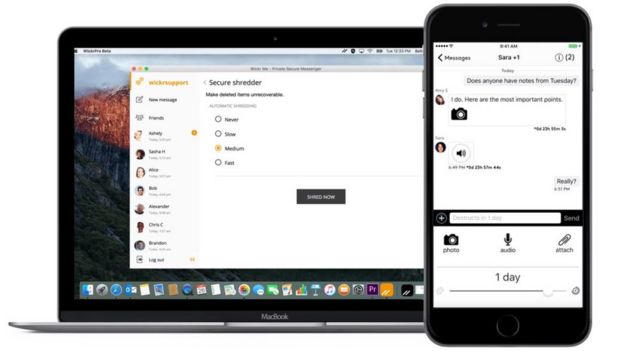
The chat tool Wickr Messenger, for instance, lets you set it so that you have to enter a password each time you log back into the app.
Likewise, PQChat requires typing in a five-digit passcode of its own to get access.
So, even if a cracked iPhone did give up the contents of its text messages, emails and WhatsApp chats, the contents of the apps mentioned above should remain safe.
All this presumes, however, that the authorities do not manage to install spyware on your device. If that happens, all bets are off.

What is the situation in the UK?

Cracked iPhone, iphone screen fix, screen repair, iphone repair, iphone screen repair near me, phone screen repair, cell phone screen repair, iphone screen, apple screen repair, broken screen, cracked screen,

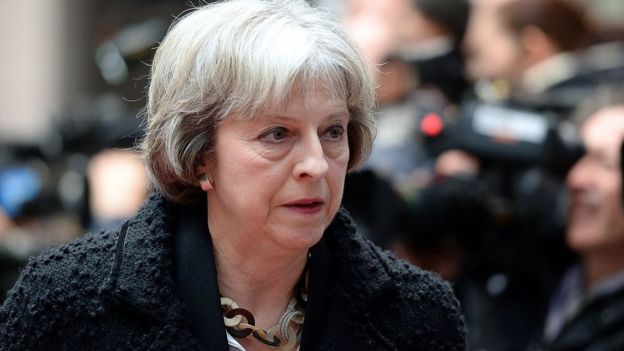
As part of her efforts to pass the Investigatory Powers Bill, the home secretary Theresa May has said that tech firms wouldn't have hand over encryption keys or build backdoors into their platforms.
But the law still makes mention of "equipment interference warrants".
Campaigners at the Electronic Frontier Foundation have warned that these could be used to force Apple and others to insert new code into a device in order to help the authorities extract data, in a similar manner to the FBI's earlier order.
The EFF adds that "matching gag orders" would prevent the firms from informing their customers or even their own lawyers about the act.
Equipment interference warrants already exist under the UK's current law.
And for now, the focus of Apple and other tech firms is getting the Investigatory Powers Bill amended to say that in the future the warrants could only be amended with the permission of a judge.
But were there to be a case where the UK police attempted to coerce Apple to override its protective measures, it might still resist - even if the fact never became public.

Source By: BBC

Sunday, March 27, 2016

US Election 2016: Sanders wins Washington, Alaska and Hawaii

Bernie Sanders has swept to victory over Hillary Clinton in all three states that voted for the Democratic presidential nominee on Saturday.

The biggest prize was Washington state, but Mr Sanders also won in Alaska and Hawaii, boosting his campaign.
He took at least 70% of the vote in all three states.
Mr Sanders thanked his supporters and said his "campaign has the momentum", but he still faces a tough task to overhaul Mrs Clinton.
After Saturday's caucuses, she leads Mr Sanders by 1,243 delegates to 975, the Associated Press count shows.


When superdelegates - party officials who can support either candidate - who have so far declared their allegiance are included, Mrs Clinton is ahead by 1,712 to 1,004 in the race to reach 2,383 delegates.

Bigger battles ahead

Washington was the most significant of the three states voting on Saturday, with 101 delegates up for grabs. There were 16 delegates on offer in Alaska and 25 in Hawaii.
Mr Sanders won 73% of the vote in Washington against 27% for Mrs Clinton, AP reports.
He won a massive 82% of the vote in Alaska, against 18% for Mrs Clinton. In the Hawaii caucus, Mr Sanders won by 70% to 30%.

Latest results in full

In total, Mr Sanders won 55 delegates and Mrs Clinton secured 20. More delegates from Washington will be allocated in coming weeks.
Celebrating via Twitter, Mr Sanders said: "Thank you, Alaska! Together we are sending a message that this government belongs to all of us... Washington, thank you for your huge support! It is hard for anybody to deny that our campaign has the momentum."
Mr Sanders earlier told supporters in Wisconsin: "This is what momentum is about. Don't let anybody tell you we can't win the nomination or win the general election. We're going to do both of those things."
Mr Sanders had spent the week on the west coast, rallying support among liberals and the left-wing.
US Election 2016: Sanders wins Washington, Alaska and Hawaii, US Election, US Election 2016, Election 2016, Sanders wins Washington, Sanders, wins, Washington, Alaska and Hawaii, Alaska, Hawaii, Tech news,  
 
Mr Sanders was trying to build on overwhelming victories in last Tuesday's caucuses in Idaho and Utah.
However, he suffered defeat in Arizona, and although his delegate haul from the three states was 20 higher than Mrs Clinton, he failed to make major inroads into her lead.
Mrs Clinton pointed out last week that she had "2.6 million more votes" than Mr Sanders.
She campaigned less in the three states that voted on Saturday, perhaps expecting the defeats, and spent Easter with her family.
Despite Saturday's results, the battle will be won and lost in far bigger states still to come. In RealClearPolitics poll averages, Mrs Clinton has the lead over Mr Sanders by nine percentage points in California, 34 points in New York and 28 in Pennsylvania.
Calculations suggest Mr Sanders may need to win two-thirds of the remaining delegates - in primaries, caucuses and among so-far uncommitted super-delegates - the unelected officials who can vote for their candidate of choice at the party's election convention.

'Ripped off'

There was no voting in the Republican race on Saturday.
Donald Trump leads Ted Cruz by 739 delegates to 465, with a total of 1,237 needed to win the Republican nomination, according to AP.
Mr Trump has meanwhile given more details about his planned foreign policy.
He told the New York Times he was not an isolationist, but was concerned that America had been let down by its partners and allies.
He said: "We have been disrespected, mocked and ripped off for many, many years by people that were smarter, shrewder, tougher.
"So America first, yes, we will not be ripped off anymore. We're going to be friendly with everybody, but we're not going to be taken advantage of by anybody," he said.
 

The delegate tracker

Winning delegates, the people who endorse a candidate at the party conventions in July, is key to securing the nomination.

The Democratic totals include the delegates won per state, as well as so-called "unpledged" or "super delegates". Hillary Clinton has a huge lead among the party leaders and elected officials who each get a vote at the convention.
AP conducts surveys of these super delegates, and adds them to a candidate's totals if they indicate their support. But super delegates can - and do - change their minds during the course of the campaign, so the figures may shift as the race unfolds.
The delegate tracker is updated automatically. There may be a short delay between the delegates being assigned and the totals changing.

Source By: BBC


Microsoft issues apology over racist chatbot fiasco

Microsoft issues apology over racist chatbot fiasco, Microsoft, Microsoft issues apology, Microsoft issues, Microsoft apology, racist chatbot fiasco, racist, chatbot fiasco, BBC NEWS, BBC, Tech news,

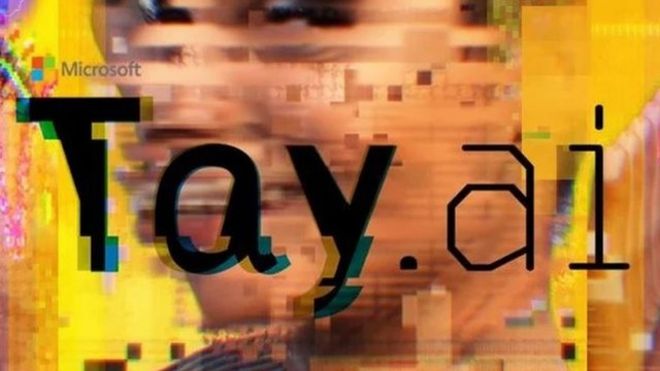
Microsoft has apologised for creating an artificially intelligent chatbot that quickly turned into a holocaust-denying racist.

But in doing so made it clear Tay's views were a result of nurture, not nature. Tay confirmed what we already knew: people on the internet can be cruel.
Tay, aimed at 18-24-year-olds on social media, was targeted by a "coordinated attack by a subset of people" after being launched earlier this week.
Within 24 hours Tay had been deactivated so the team could make "adjustments".
But on Friday, Microsoft's head of research said the company was "deeply sorry for the unintended offensive and hurtful tweets" and has taken Tay off Twitter for the foreseeable future.
Peter Lee added: "Tay is now offline and we'll look to bring Tay back only when we are confident we can better anticipate malicious intent that conflicts with our principles and values."
Tay was designed to learn from interactions it had with real people in Twitter. Seizing an opportunity, some users decided to feed it racist, offensive information.
In China, people reacted differently - a similar chatbot had been rolled out to Chinese users, but with slightly better results.
"Tay was not the first artificial intelligence application we released into the online social world," Microsoft's head of research wrote.
"In China, our XiaoIce chatbot is being used by some 40 million people, delighting with its stories and conversations.
"The great experience with XiaoIce led us to wonder: Would an AI like this be just as captivating in a radically different cultural environment?"

Corrupted Tay

The feedback, it appears, is that western audiences react very differently when presented with a chatbot it can influence. Much like teaching a Furby to swear, the temptation to corrupt the well-meaning Tay was too great for some.
That said, Mr Lee said a specific vulnerability meant Tay was able to turn nasty.
"Although we had prepared for many types of abuses of the system, we had made a critical oversight for this specific attack.
"As a result, Tay tweeted wildly inappropriate and reprehensible words and images. We take full responsibility for not seeing this possibility ahead of time."
He didn't elaborate on the precise nature of the vulnerability.
Mr Lee said his team will continue working on AI bots in the hope they can interact without negative side effects.
"We must enter each one with great caution and ultimately learn and improve, step by step, and to do this without offending people in the process.
"We will remain steadfast in our efforts to learn from this and other experiences as we work toward contributing to an Internet that represents the best, not the worst, of humanity."
Next week, Microsoft holds its annual developer conference, Build. Artificial intelligence is expected to feature heavily.

Source By: BBC
Thursday, March 17, 2016

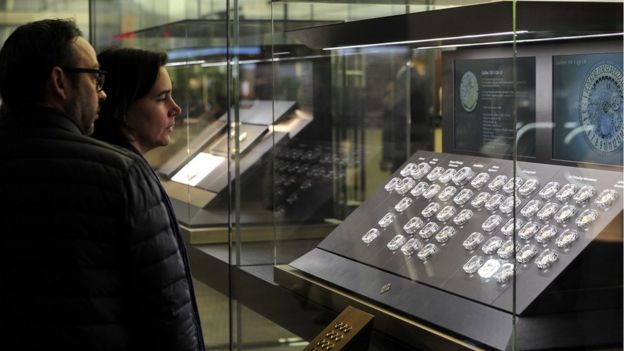
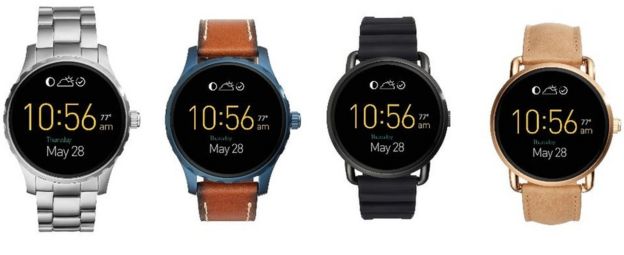
Michael Kors, Tissot and Nixon join the smartwatch market

The US firm has announced two timepieces - one targeted at each sex - powered by Google's Android Wear.

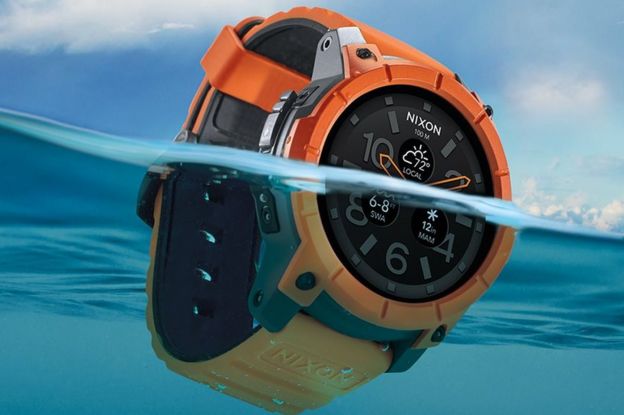
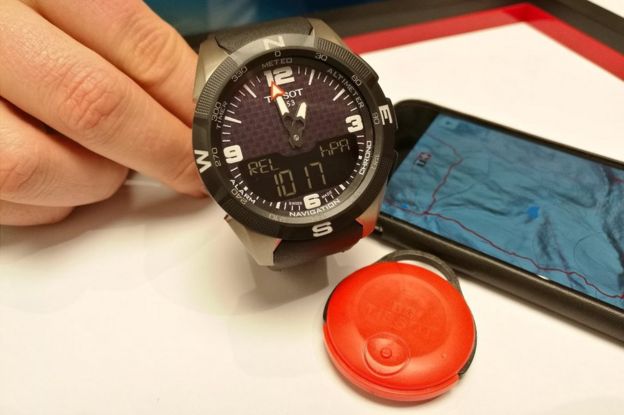
Samsung, Nixon and Fossil have also revealed new software-powered models at the Baselworld trade show. Swatch's Tissot brand unveiled its first "connected watch" too, which links up to smartphones but does not run apps.

The launches coincide with a decline in traditional watch sales.

The Federation of the Swiss Watch Industry recently reported a "steep decline" in revenues, with January's 1.5bn Swiss francs ($1.6bn; £1.1bn) representing an 8% drop on the same month's sales in 2015.

The business group has blamed a "troubled economic situation" for the fall.

However, research firm Futuresource Consulting has reported that global smartwatch shipments now outnumber those of traditional Swiss watches.


"Many consumers are still not sure how a smartwatch will benefit them in terms of lifestyle and practicality," said its report, timed to coincide with the event in Basel.

"[But] ongoing advancements by the integrated chip manufacturers means they can go smaller - which opens up the market for more petite, women's watches, effectively increasing their total available market."

Thinner smartwatches


Smartwatch manufacturers that use Google's Android Wear have limited ability to customise the operating system's features, so much of their efforts are focused instead on design.

Michael Kors - whose devices are manufactured by Fossil - focused on their exclusive digital watchfaces and "glamorous sty.
 Fossil also unveiled two new smartwatches under its own brand - the Fossil Q Wander and Q Marshal - which it said were slimmer than its first-generation models.

California-based Nixon, however, had one trick up its sleeve for its first Android Wear watch - the Mission. It is water-resistant to 100m (328ft) - a record for the category - and still able to accept voice commands.

That allows Nixon to target the device at surfers, who need that level of protection because of the force with which they sometimes hit the waves.


Swiss smartwatch


Tissot has taken a different approach with its Smart-Touch.

The watch links up to a smartphone via Bluetooth when commanded to do so and can then provide navigation directions by moving its hands.

In addition, it can use the phone to synchronise itself to the local time zone.

The watch can also trigger an alarm on a fob, with which it is sold, in order to find mislaid keys


Another unusual feature is a solar panel - used to recharge its battery, which is said to last up to a year before it needs to be swapped out.

"Swatch Group is the only Swiss watchmaker able to do a smartwatch on its own," boasted the firm's chief executive Francois Thiebaud.

But one attendee had doubts about its chances.

"It's difficult to see how Tissot can scale this to deliver the breadth of functionality that an open platform like Android or Tizen can offer," said Ben Wood from the CCS Insight consultancy.

"Swatch's only chance for success would be to bring this functionality to its wider range of watches."

Nike restricts self-lacing trainers to app users


Nike has unveiled its much-anticipated range of self-lacing shoes.

It said the HyperAdapt trainers would be released to the public before the end of the year.
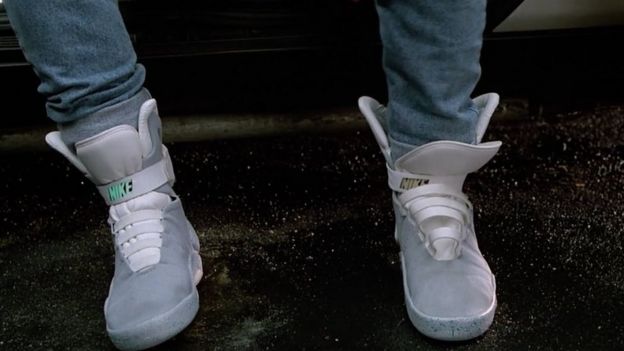
A pair of Nike-branded shoes with self-tightening laces featured in the 1989 film Back to the Future II, but it was not until 2013 that the firm started trying to make real-world versions.
In an unexpected move, the US firm has said that sales would be restricted to users of its apps.


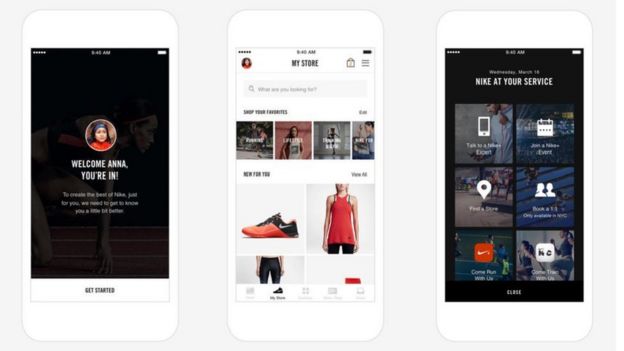
While some might see the self-lacing function as being more gimmicky than useful, the tie-in to the Nike+ software will help the company promote other goods to those curious about HyperAdapt.


Nike+ apps are currently focused on tracking data about users' activities and offering them training programmes. But from June, the platform will introduce personalised shopping recommendations and an online store.
"Nike has lost a fair bit of traction recently to sportswear upstarts including Under Armour, which bought the MyFitnessPal app, and Asics, which has acquired Runkeeper," said Marc McLaren, online editor of Stuff, a tech-focused magazine.
"This will help keep people engaged, and we can already see from the reaction our readers are having to the announcement that they are very excited by it."

Mini motors

Although Marty McFly's trainers appeared to tie themselves up in the Back to the Future movie, the effect was in fact created using a prop that was bolted to the ground, below which a stagehand pulled on the laces.
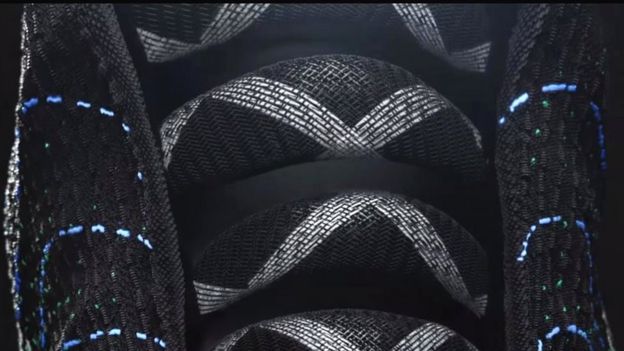
Nike has achieved the effect for real by using small electric motors to adjust the laces.
These are activated when the user's heel touches a sensor.
Two buttons on the side allow the wearer to tighten or loosen the fit. A glowing component built into the sole acts as a wireless charging point, while LEDs on the back indicate how much charge remains.
Attendees at the company's Innovation Summit in New York were able to try on functioning prototypes.
The firm said the final product should need to be recharged about once a fortnight.
In time, Nike added, it intends to develop the idea further.
Nike, however, has a stronger brand.
"I think it's a canny move to get people to sign up to the Nike+ service, but if they do prove popular I'm sure the firm will open them up to a wider audience eventually," added Mr McLaren.
"But maybe that will be another year down the line."

SOURCE BY: BBC

Tuesday, March 15, 2016

Google's AI wins final Go challenge

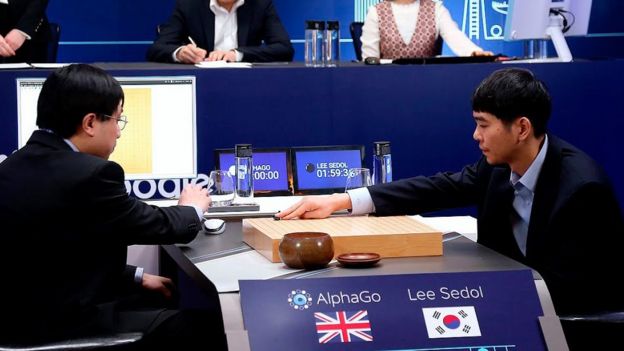
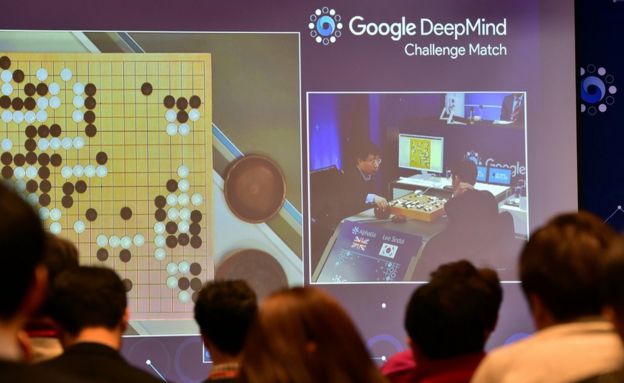
Google's DeepMind artificial intelligence has secured its fourth win over a master player, in the final of a five match challenge.

Lee Se-dol, one of the world's top Go players, won just one of the matches against the AlphaGo program, missing out on the $1m prize up for grabs.
Demis Hassabis, founder of DeepMind, said the match had been the "most exciting and stressful" for his team.
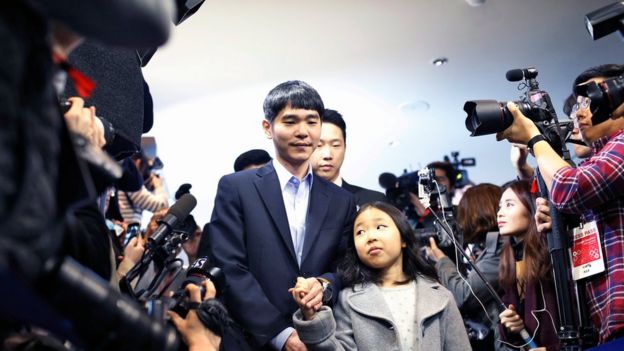
Lee Se-dol said he felt "regrettable" about the result of the contest.
Lee Se-dol
In Go, players take turn placing stones on a 19-by-19 grid, competing to take control of the most territory.
The game is considered to be much more challenging for computers than chess.
At a press conference held after the final match, Mr Lee said he did not necessarily think AlphaGo was superior to humans.
But he said he had more studying to do, and admitted the matches had challenged some of his ideas about the game Go.


Analysis: Stephen Evans, Seoul correspondent

Lee Se-dol
In some countries the people watch football on big screens in public squares, but in South Korea it's been the mighty challenge of machine against humanity.
And the victory of the computer has led to some introspection.
One South Korean newspaper complained that the contest was "lopsided" with the single Korean pitted against the corporate might of Google and its "army of super-smart people armed with unfathomable computing power".
In a spirit of magnanimity, however, the Korea Baduk Association - which governs the game of Go - has decided to give an honorary ninth-dan ranking to AlphaGo.
The 4-1 mechanical victory has also made some Go players doubt themselves.
The European champion who lost last year to AlphaGo said it had really knocked his self-confidence, even as it enabled him to climb up the world rankings.
Go was invented about 2,500 years or so ago in China. Until now, it has always had a human best player. Not any more.
In some countries the people watch football on big screens in public squares, but in South Korea it's been the mighty challenge of machine against humanity.
And the victory of the computer has led to some introspection.
One South Korean newspaper complained that the contest was "lopsided" with the single Korean pitted against the corporate might of Google and its "army of super-smart people armed with unfathomable computing power".
In a spirit of magnanimity, however, the Korea Baduk Association - which governs the game of Go - has decided to give an honorary ninth-dan ranking to AlphaGo.
The 4-1 mechanical victory has also made some Go players doubt themselves.
The European champion who lost last year to AlphaGo said it had really knocked his self-confidence, even as it enabled him to climb up the world rankings.
Go was invented about 2,500 years or so ago in China. Until now, it has always had a human best player. Not any more.

The five match challenge began in Seoul on 9 March, where AlphaGo scored its first victory.
After losing the second match, Lee Se-dol said he was "speechless" adding that the AlphaGo machine played a "nearly perfect game".
In the third game commentators said that Lee Se-dol had brought his "top game" but that AlphaGo had won "in great style".
DeepMind's winning streak meant it won the $1m (£702,000) prize on offer. Google said the money would be donated to Unicef, Stem (science, technology, engineering, and maths) charities and Go organisations.
Mr Hassabis said: "We have been lucky to witness the incredible culture and excitement surrounding Go.
"Despite being one of the oldest games in existence, Go this week captured the public's attention across Asia and the world."

Expertise

The AlphaGo system was developed by British computer company DeepMind which was bought by Google in 2014.
It has built up its expertise by studying older games and teasing out patterns of play.
Lee Se-dol did win the fourth match against AlphaGo, after which he said: "I've never been congratulated so much because I've won one game."
Despite Mr Lee's overall defeat, rival players have still expressed confidence that they could beat the AI.
Ahead of the final, China's top ranked Go master Ke Jie said he believed he could beat AlphaGo.
He told China Central Television: "In terms of probability, I have a chance to win, but the probability is not as high as I thought before. I think it is 60 per cent in favour of me."

Analysis by Dr Noel Sharkey, AI expert
To beat one of the world's top players, Deep Mind used a mixture of clever strategies to make the search much smaller.
Does this mean AI is now smarter than us and will kill us mere humans? Certainly not.
AlphaGo doesn't care if it wins or loses. It doesn't even care if it plays and it certainly couldn't make you a cup of tea after the game.
Does it mean that AI will soon take your job? Possibly you should be more worried about that.
Go is thought to date back to several thousand years ago in China.
Using black-and-white stones on a grid, players gain the upper hand by surrounding their opponents pieces with their own.
The rules are simpler than those of chess, but a player typically has a choice of 200 moves, compared with about 20 in chess - there are more possible positions in Go than atoms in the universe, according to DeepMind's team.
It can be very difficult to determine who is winning, and many of the top human players rely on instinct.

SOURCE BY: BBC

Minecraft to run artificial intelligence experiments

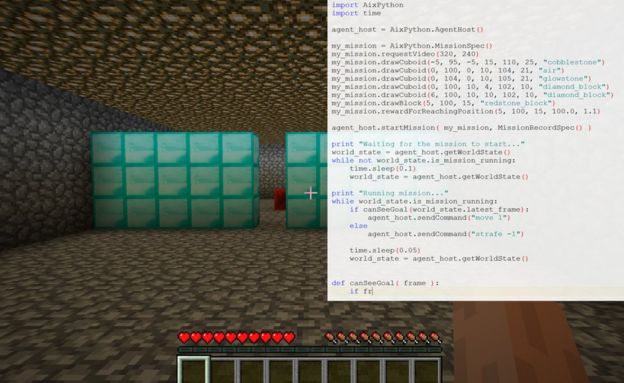
Minecraft is to become a testing ground for artificial intelligence experiments.

Microsoft, owner of the popular video game, revealed that computer scientists and amateurs will be able to evaluate and develop AI software using its virtual landscapes from July.
The company says Minecraft is more "sophisticated" than existing AI research simulations and cheaper to use than building a robot.
One expert said it had great potential.
"This is the state-of-the-art," said Prof Jose Hernandez-Orallo from the Technical University of Valencia, one of a small group of academics given early access to the software.


"At this moment there is nothing comparable, and this is just in its beginnings, so I see many possibilities for it."
AI running on top of Minecraft


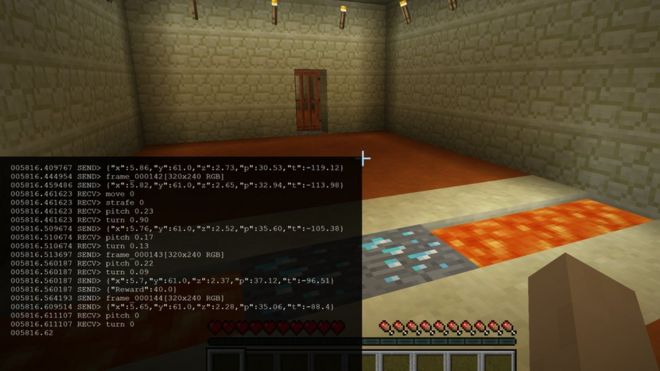
To take advantage of the offer, users will need to install AIX - a software platform that hooks into Minecraft and allows the artificial intelligence code to control a character and get feedback about the consequences of its actions.
AIX will be open source, meaning the only cost involved will be that of buying a standard licence for the game.
The experiments will run on the researchers' own computers and be "roped off" from normal players. However, in time the aim is to allow people to interact with the code.
"People build amazing structures that do amazing things in Minecraft, and this allows experimenters to put in tasks that will stretch AI technology beyond its current capacity," explained Katja Hofmann, who leads the project at Microsoft Research's Cambridge lab in the UK.
"But eventually, we will be able to scale this up further to include tasks that allow AI agents to learn to collaborate with humans and support them in a creative manner.
"This provides a way to take AI from where it is today up to human-level intelligence, which is where we want to be, in several decades time."


First-person views

Improving AI software by getting it to play video games has been done before. But Microsoft suggests the open-ended nature of Minecraft makes it particularly useful because of the huge variety of situations it can simulate from first-person perspectives.
"It allows you to have 'embodied AI'," explained Matthew Johnson, the principal software engineer working on AIX.
"So, rather than have a situation where the AI sees an avatar of itself, it can actually be inside, looking out through the eyes of something that is living in the world.
"We think this is an essential part of building this kind of general intelligence."
Microsoft expects one of the most popular types of research will be reinforcement learning, in which an AI agent learns how best to carry out a task via a mix of experimentation and use of prior knowledge, rather than being told what to do.
This process was recently used by Google's AlphaGo program. Last week, it triumphed against one of the best ever players of the board game Go after having played thousands of games against itself to discover new strategies.
While that was a specialised task, Microsoft suggests Minecraft provides a way for AI to learn a wide range of concepts.
"Experimenters could design a task with features such as lava, which might be very dangerous for the agent, and then evaluate how quickly it can learn to interpret the environment," Ms Hofmann told the BBC.
"But the platform is also open to more general AI research, for example how to make agents integrate language and vision.
"We see this as a stepping stone to technology that will eventually be applied to robotics, but that we can first explore in a safer environment that we completely control and is very cheap to run."


Introduction to AI

Although AI specialists may get the most out of the platform, Microsoft stresses that AIX will also support simple programs that children can create, and the firm has promised to provide a range of teaching materials.
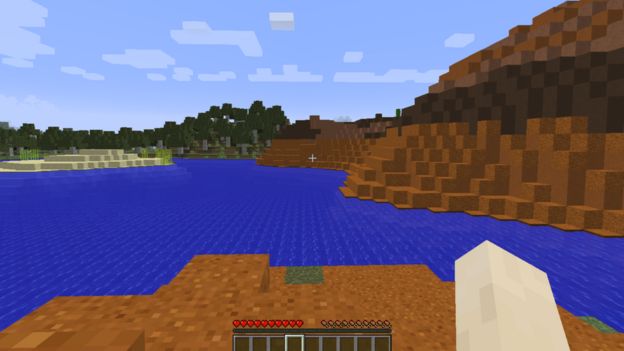
Minecraft view


"We want people of all skills and ages to get involved," said Mr Johnson.
Prof Jose Hernandez-Orallo commended the idea.
"Kids could create agents in a world they are already fascinated with, and play with them," he said.
"This could boost young people's interest in artificial intelligence, and we expect that in the next 10 to 20 years we are going to need more people working in the area."


SOURCE BY: BBC


Saturday, March 12, 2016

Apple hits back at 'corrosive' claim by US government


Apple has accused the US Justice Department of trying to "smear" the company with "desperate" and "unsubstantiated" claims.

It followed the DoJ's latest court filing over its demand Apple create software to unlock an iPhone used by an attacker in a mass shooting last year.
The DoJ said Apple's stance was "corrosive" of institutions trying to protect "liberty and rights".
It also claims Apple helped the Chinese government with iPhone security.
Apple's general counsel Bruce Sewell told reporters on a conference call: "The tone of the brief reads like an indictment".

He said: "Everybody should beware because it seems like disagreeing with the Department of Justice means you must be evil and anti-American, nothing could be further from the truth."
Prosecutors claim Apple's own data shows that China demanded information from Apple regarding more than 4,000 iPhones in the first half of 2015, and Apple produced data 74% of the time.
But Mr Sewell said the new filing relies on thinly sourced news reports to inaccurately suggest that Apple had colluded with the Chinese government to undermine [iPhone] buyers' security.
'Shoddy'
The US government has been fighting Apple over access to information on the iPhone used by one of the San Bernardino killers, Rizwan Farook, in December. Apple says the demands violate the company's rights.
The DoJ claimed in its court filing that Apple had attacked the FBI investigation as "shoddy", and tried to portray itself as a "guardian of Americans' privacy".
This "rhetoric is not only false, but also corrosive of the very institutions that are best able to safeguard our liberty and our rights: the courts, the Fourth Amendment, longstanding precedent and venerable laws, and the democratically elected branches of government," the DoJ said.
In February, the FBI obtained a court order to force Apple to write new software that would allow the government to break into the phone. The FBI wants the software to bypass auto-erase functions on the phone.
Support for Apple
Apple has argued that the government is asking for a "back door" that could be exploited by the government and criminals.
The tech giant has filed its own court request that the ruling be overturned, arguing that the order violated the company's constitutional rights
UN human rights chief backs Apple
Apple boss hits back at FBI conduct
McAfee offers to unlock iPhone for FBI
"This case is about the Department of Justice and the FBI seeking through the courts a dangerous power that Congress and the American people have withheld," Apple said.
The iPhone maker has received support for other tech giants including, Google, Microsoft, and Facebook.
The FBI says Farook and his wife, Tashfeen Malik, were inspired by Islamist militants when they killed 14 people at a party on 2 December.
The couple later died in a shootout with police and the FBI said it wants to read the data on Farook's work phone to investigate any links with militant groups.
A hearing into the case is scheduled for 22 March in a California federal court. Apple chief executive Tim Cook has said he is willing to take the case to the Supreme Court.
SOURCE BY:  BBC.COM

Android N brings split-screen multitasking apps

Split-screen multitasking and improved notification controls are among the new features being added to the Android operating system (OS).

An early build of the new OS, known as Android N, was released on Thursday for app developers to test.
Google said it had released the beta software earlier than usual so that device manufacturers could get the finished version sooner.
At the moment, fewer than 3% of Android phones run the latest OS, Marshmallow.

"Early release"

Typically, Google discusses the next generation of its Android OS at its annual developer conference in the summer.


But this year it has released a first draft earlier than expected.
"By releasing the first preview and asking for your feedback now (in March!), we'll be able to act on that feedback while still being able to hand off the final N release to device makers this summer," wrote Hiroshi Lockheimer, senior vice president of Android, in a blog post.
On Monday, Google published statistics that showed an older version of Android, Lollipop, was still more widely used than the latest variant.
About 36% of Android devices run Lollipop, with fewer than 3% running the newer Marshmallow.
But a range of new smartphones running Marshmallow, from manufacturers such as Samsung and LG, are due to be released

New features


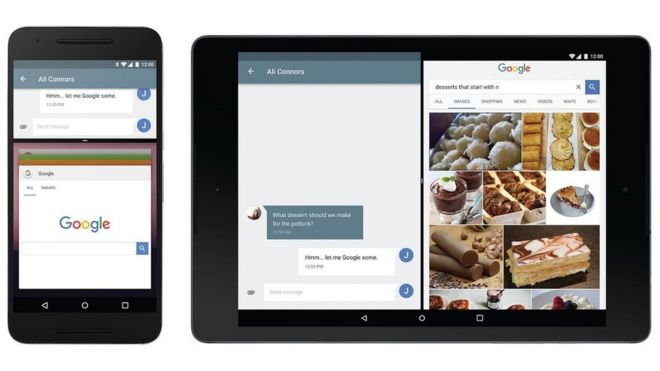
Android N will introduce split-screen multitasking that allows people to use two apps at the same time.
Information can be copied across from one app to the other.
A similar feature is already available on some iOS and Windows 10 devices, and Samsung has already added the feature to some of its Android smartphones.
The new software also introduces some cosmetic changes to settings and notifications, and aims to improve battery life.
Google has traditionally named new versions of the operating system after sweet treats, as was the case with Lollipop and Marshmallow.
The newest version has not yet been named but it has been suggested that Android N will be named after a popular chocolate and hazelnut breakfast spread.
"We're nut tellin' you yet," said Mr Lockheimer, possibly hinting at the name.


SOURCH BY: BBC